
The Future on Earth and Our Sun-System
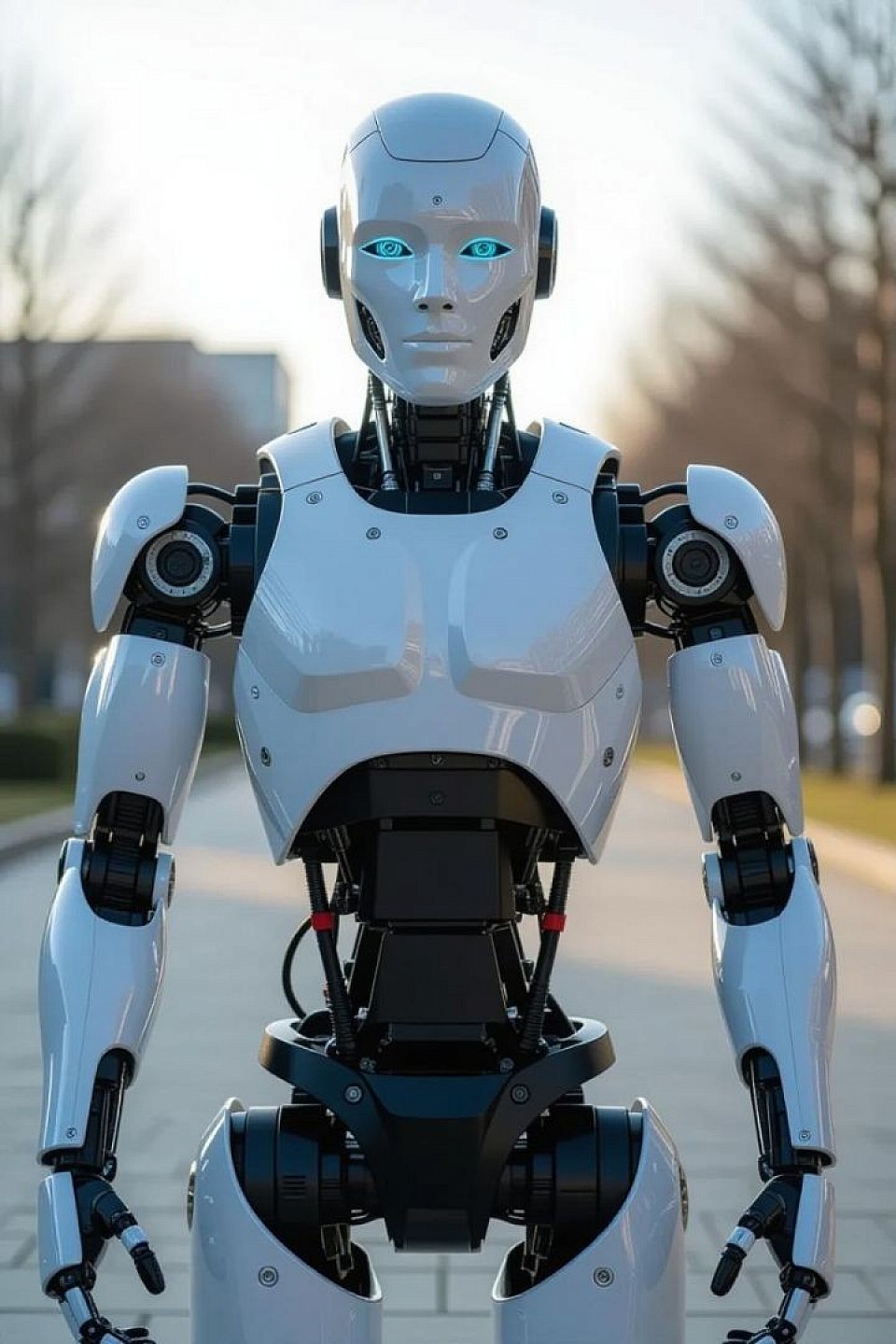
Humanoid
My List
- Robots: We need more robots!
- Humanoids: For simple tasks.
- Androids: Present in shops, restaurants and clubs.
- Cyborgs: Replaced body parts make you a cyborg.
- Portals: Flights are for enjoyment of travel. We need portals from city to city. From planet to planet? Some in remote areas of nature.
- Drives: Long lasting and small.
- Vehicles: Mainly about spaceships and drones.
- The stations on Earth: Space airports.
- The station on the moon: Base Luna.
- The station on the Mars: Red Rock Base 28
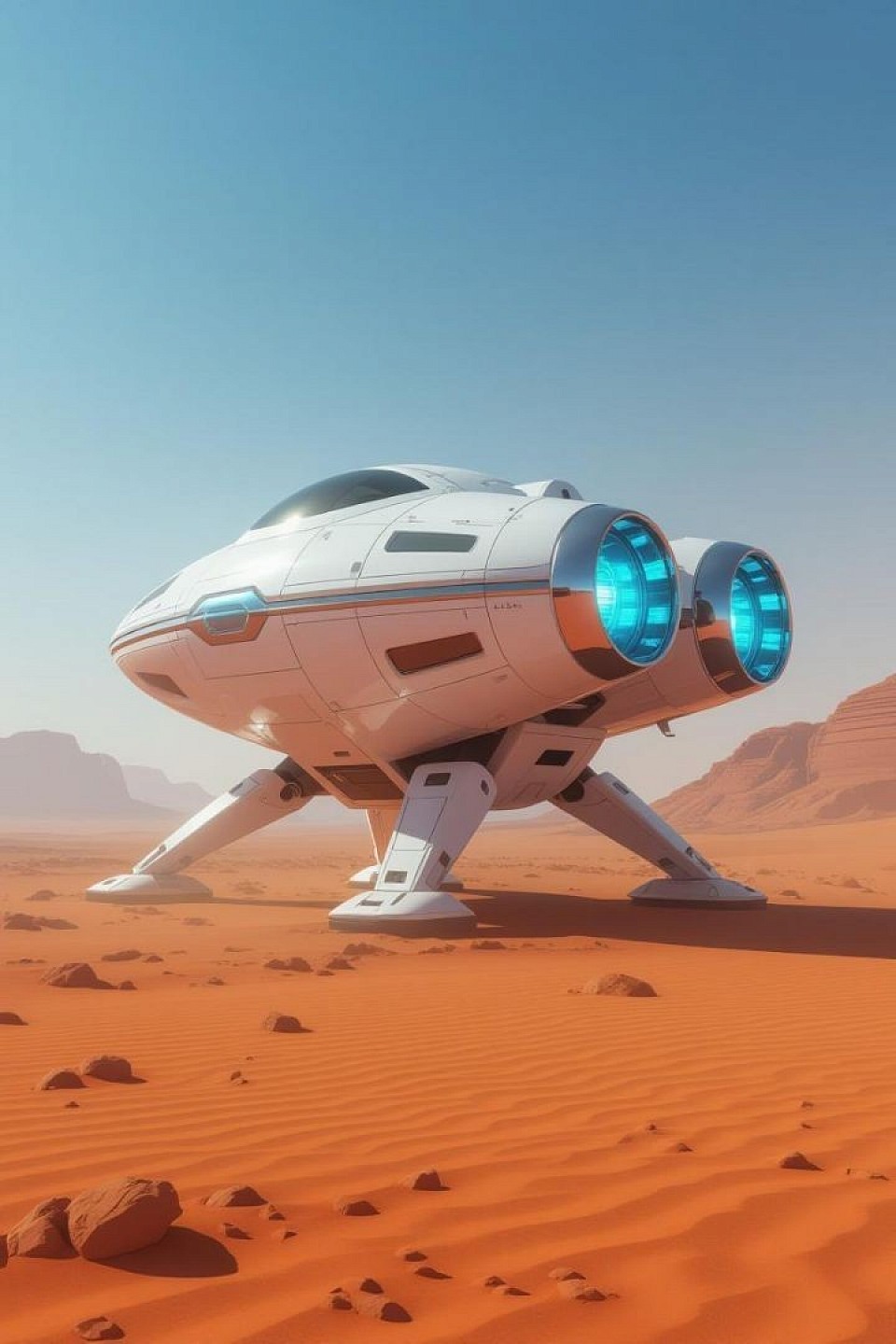
Spaceship
Meant to Function
Flights are for travel enthusiasts! We need portals! Walking through is more pleasant than beaming? What’s more fun? Are there risks? It’s like with airplanes: built to work. Imagine a portal in a big city! It takes you to a high-altitude spot in the mountains. Elevators could be replaced. Rainforests, deserts, islands, the poles—reachable in seconds. All you need is a more powerful computer. How powerful? Compare Colossus to a laptop. Everything’s doable. What you see is just a circular gate installed on the ground. If we had portals now, we’d only need one flight to Mars. Space engineers would install the counterpart gate there. Mars isn’t a vacation destination? Why not, if it’s possible?
The Walk-On-It-Matters
Our solar system ends near Pluto. The primarily accessible bodies are Earth, Mars, and Earth's Moon. However, there are other theoretically accessible moons and large asteroids. The main factors determining this are the material and temperature. If Mercury weren’t so close to the Sun, it could also be visited. All other planets are made of gas. On the moons beyond Mars, it’s very cold, and on asteroids, you’d more likely hop than walk. We’re talking about the future of Earth and our solar system—about their traversability. To quote the author: “Technology advances. Fiction becomes reality. Always has.”
The Outstation
If a large space station is assembled piece by piece in space, you could travel there too. Space stations that "stay in place" in space are not designed to fly away. I’m not talking about stations in orbit, but those beyond it. A system to keep them fixed in position is necessary. Drifting must be prevented, as well as protection from flying debris, for example, through laser defense technology.
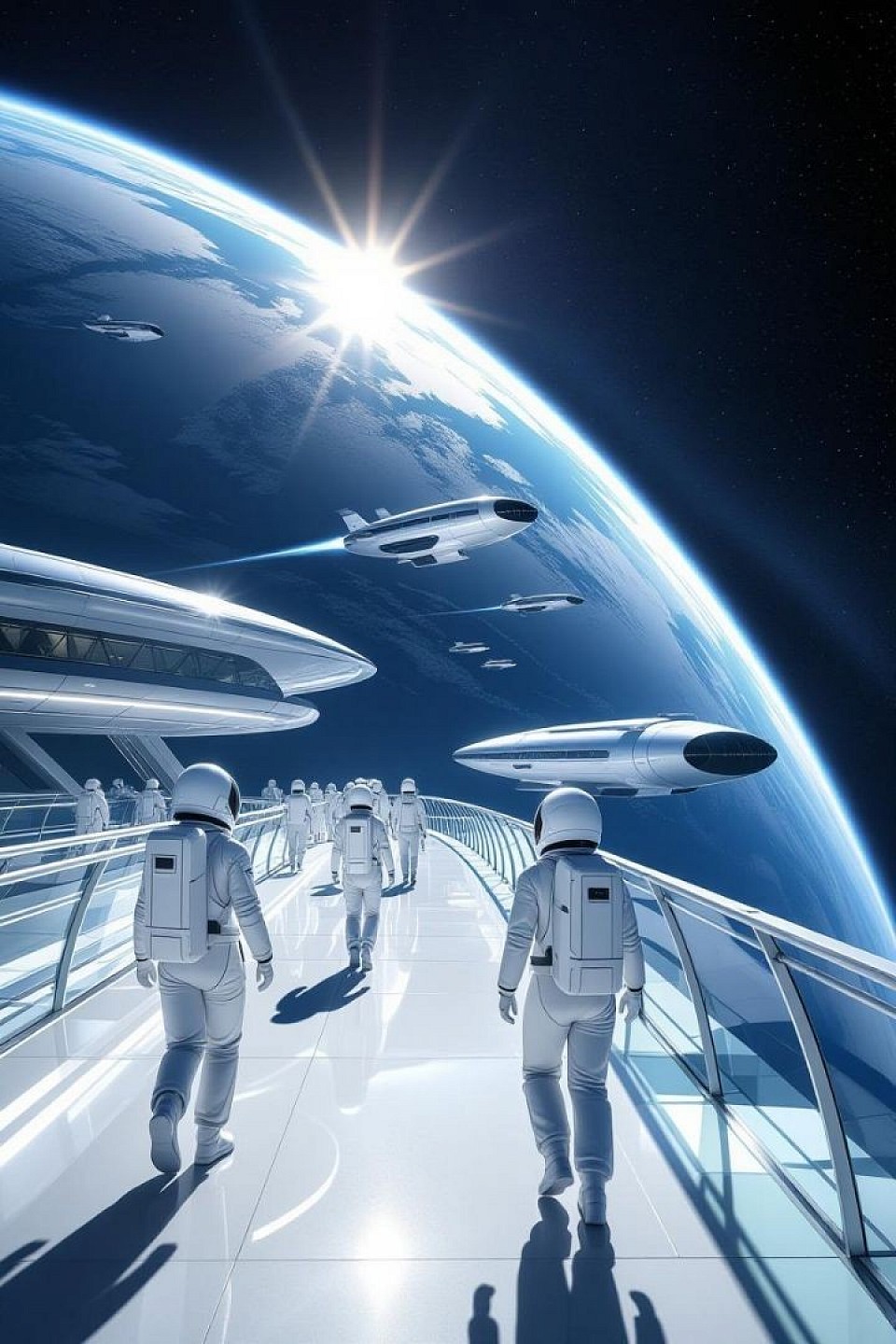
Space Station
Holograms
Hologram messages are a futuristic form of communication that uses three-dimensional, projected images to convey messages. This technology creates realistic, floating representations of people or objects, which can be transmitted in real-time or as recordings. It is used in areas such as entertainment, advertising, or teleconferencing, offering an immersive experience.
The Materialization of Holograms: A Bridge Between Technology and the Astral
In an advanced era of quantum technology, the materialization of holograms enables not just the transmission of images but a true fusion of matter, spirit, and space. Imagine this: A person stands in front of a specially calibrated camera that captures not only visual data but also the subtle vibrations of the soul—the astral core of their being. Through a process combining laser interference with bioenergetic fields, the hologram is generated at the receiving location. But the magic doesn’t stop at a mere projection.
The soul, as the essential astral component of creation, temporarily detaches from the sender’s physical body and travels through the quantum channel into the hologram. At the destination, not just a deceptively real image materializes, but a complete, identical body that now houses the soul of the traveler. The original body at the starting point remains in a kind of stasis, empty and awaiting the soul’s return.
This process thus goes far beyond mere message transmission. It enables true teleportation: A person overcomes distances in seconds without physical travel. To achieve this, the technical system must integrate the astral aspect of reality—through crystals that amplify vibrations or algorithms that resonate with universal energy fields. In this way, science merges with the metaphysical, and the boundaries between body, soul, and hologram dissolve. A revolution that brings us closer to the true unity of the cosmos.
Teleportation: The Fusion of Mind, Machine, and Soul
Teleportation, once a dream of science fiction, becomes reality through the synthesis of mental power and technological innovation.
The foundation is the mental ability of the human. The mind recognizes the possibility of teleportation, transcending the boundaries of space and matter. This conscious intention activates the ability to project oneself beyond the physical.
An advanced machine supports this process. It serves as an interface, translating mental intent into a precise quantum mechanical transmission by capturing and transferring the energy patterns of the body and soul.
The soul experiences teleportation either as an instantaneous awakening at the destination or as a conscious journey through an energetic channel that bridges space and time.
What happens to the body at the starting point? It either remains in a temporary stasis, ready for the soul’s return, or, in rare cases, is completely converted into energy to be rematerialized at the destination. Thus, teleportation unites the power of the mind, the precision of technology, and the journey of the soul in a groundbreaking act of creation.
Robot Typs
Humanoid: A being or object that resembles a human in appearance and/or behavior. The term describes the form or function that mimics a human, without necessarily being technological (e.g., robots, statues, or fictional beings).
Android: A robot or artificial entity designed specifically to imitate human appearance and behavior. Androids are often advanced machines with human-like appearance and AI, commonly found in science fiction (e.g., Data from Star Trek).
Cyborg: A being that combines biological (human or animal) and technological (mechanical or electronic) components. Cyborgs are partly organic and partly mechanical (e.g., humans with prosthetics or implants like pacemakers).
Occupy Planets
If new planets are habitable but the landscape resembles Earth's during the dinosaur era, it might be more practical to use vehicles that mimic the long legs of dinosaurs. Swamps or rocky terrains could be better navigated.
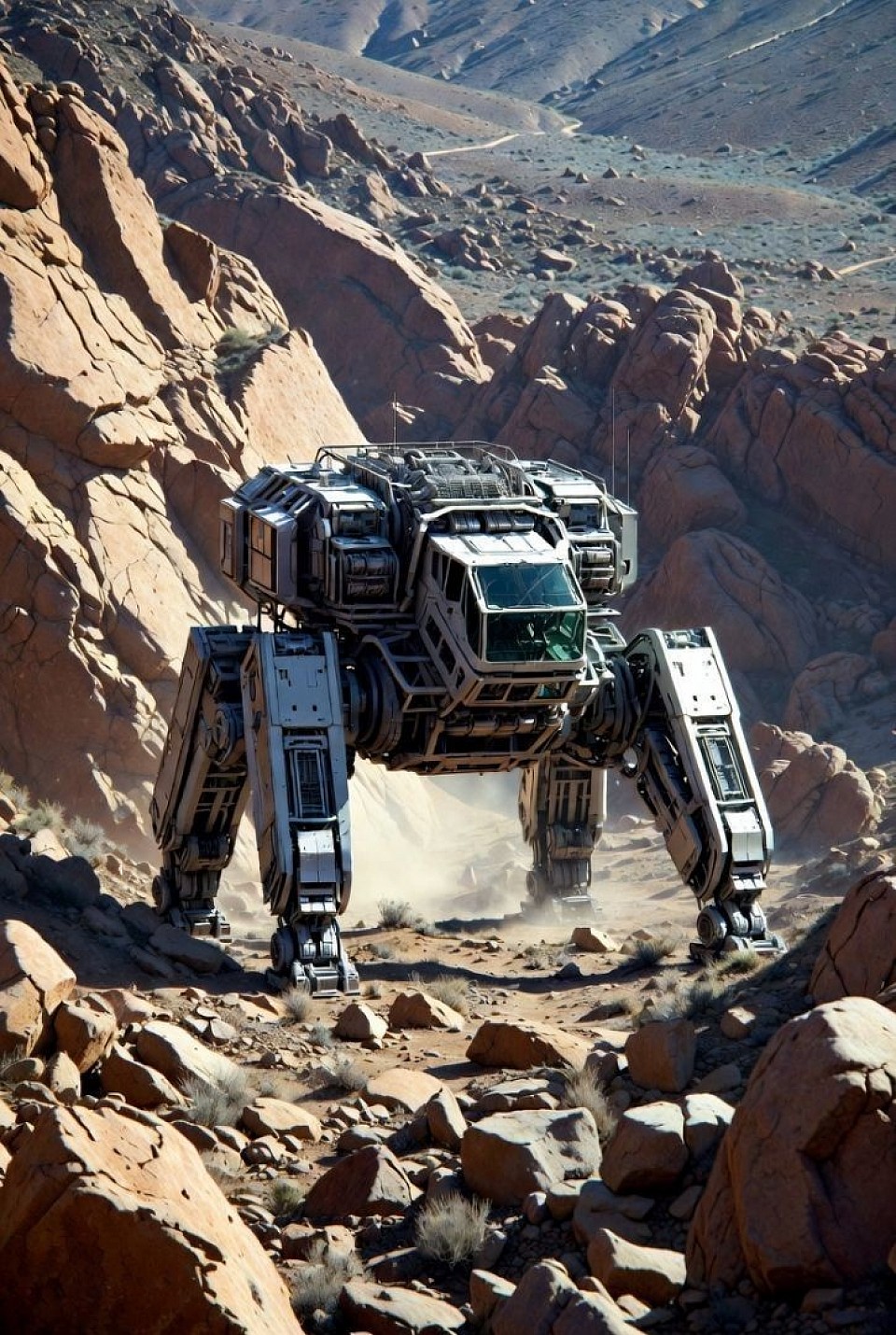
Vehicle
Humanoider Roboter Unitree G1 stapft bei -47,4 °C durch Eis und Schnee
Cyborgs
Cyborg-Themen: Der künstliche Körper als Ersatz
Die Vorstellung eines vollständig oder teilweise künstlichen Körpers wirft spannende Fragen über die menschliche Existenz und das Bewusstsein auf. Hier ist die strukturierte Analyse meiner Gedanken:
Kategorisierung der Tätigkeiten
Tätigkeiten, die nicht mehr funktionieren: Klassische biologische Prozesse, die an organische Materie gebunden sind (z. B. natürliche Verdauung, biologisches Altern oder rein hormonelle Instinkte).
Tätigkeiten, die trotzdem funktionieren: Grundlegende Interaktionen mit der Umwelt, wie Sprechen, Bewegen und das bewusste Wahrnehmen der Außenwelt durch Sensoren.
Tätigkeiten, die nur so funktionieren: Leistungen jenseits menschlicher Limits – etwa der Zugriff auf Datennetzwerke direkt im Geist, extreme physische Belastbarkeit oder das Überleben in lebensfeindlichen Umgebungen (Vakuum, extreme Hitze).
Existenz und Bewusstsein
Sorglosigkeit: Ein künstlicher Körper könnte viele alltägliche Sorgen eliminieren, wie Krankheiten, physischen Verfall oder die Notwendigkeit von Nahrung und Schlaf.
Astrale Erlebnisse: Diese bleiben mit dem „Selbst“ verbunden. Auch ohne biologische Rezeptoren können sie auf der Empfindungsebene im Geist stattfinden, da das Bewusstsein die Quelle der Erfahrung bleibt.
Der Beweis: Damit wäre erbracht, dass der Körper zwar die erste sichtbare Wahrheit ist, aber für das eigentliche Leben (das Bewusstsein) nicht zwingend notwendig ist.
Typen der Integration
Typ und Beschreibung
100%-Cyborgs: Vollständiger Ersatz des biologischen Körpers; das Bewusstsein existiert in einer rein technologischen Hülle. |
Mischtypen: Hybride Wesen, bei denen nur einzelne Körperteile oder Organe durch Prothetik oder Kybernetik ersetzt wurden.
Kardashev
Here’s a clear and concise overview of the Kardashev Scale in English:
What is the Kardashev Scale?
The Kardashev Scale is a theoretical framework for classifying civilizations based on their technological advancement, measured primarily by the amount of energy they can harness and use.
Who Created It?
It was proposed in 1964 by the Soviet/Russian astrophysicist Nikolai Kardashev (1932–2019) in his paper “Transmission of Information by Extraterrestrial Civilizations.”
He designed it to help with the search for extraterrestrial intelligence (SETI) — more advanced civilizations would produce stronger, more detectable signals.
The Original Three Types
- Type I (Planetary): A civilization that can use all the energy available on its home planet (roughly 10¹⁶–10¹⁷ watts). This includes complete control over solar, wind, geothermal, fusion, and planetary resources — essentially mastering weather, climate, and all planetary energy.
- Type II (Stellar): A civilization that harnesses the entire energy output of its star (about 10²⁶ watts). The classic example is a Dyson Sphere or Dyson Swarm — massive structures built around the star to capture all its energy.
- Type III (Galactic): A civilization that controls the energy of an entire galaxy (around 10³⁶ watts), including all its stars, black holes, etc.
Where Does Humanity Stand?
We are not yet a Type I civilization.
According to Carl Sagan’s refined calculation, we are currently around Type 0.73 (as of the early 2020s).
Our global energy consumption is about 18–20 terawatts. At current growth rates (roughly 2–3% per year), we might reach Type I sometime in the 22nd–24th century — if we don’t destroy ourselves first.
Later Extensions of the Scale
Many scientists and futurists have expanded the original scale:
- Type 0: Pre-industrial or biologically limited civilizations (where humanity was until recently).
- Type IV (Universal): Controls the energy of an entire universe (10⁴⁶+ watts), possibly manipulating dark energy or galaxy clusters.
- Type V (Multiversal): Harnesses energy from multiple or all universes (speculative multiverse level).
- Even more extreme ideas go to Type Omega — civilizations that can manipulate spacetime itself, create new universes, or operate on god-like scales.
There’s also the Barrow Scale, which goes in the opposite direction: measuring progress by the ability to manipulate smaller and smaller scales (from atoms down to the quantum level).
Important Notes
- The Kardashev Scale is not a strict law of physics — it’s a thought experiment.
- It focuses only on energy consumption, not on information processing, ethics, sustainability, or wisdom.
- It raises the Fermi Paradox question: If Type II or III civilizations are possible, why don’t we see any evidence of them (Dyson spheres, galaxy-wide signals, etc.)?
In short: The Kardashev Scale is a fascinating way to think about humanity’s future and possible alien civilizations — from mastering a planet, to a star, to an entire galaxy, and beyond. It’s widely used in SETI research, science fiction, and futurism.